

Weed Management Strategies: Part 1
6/29/2021 - By Clay Breazeale
Continue reading Weed Management Strategies: Part 2.
The summer solstice marks the seasonal midway point for many turf managers. The solstice is a great time for in-season assessments of agronomic programs. Especially relevant to the southeast are the weed management and pre-emergence programs, because annual bluegrass season is over, summer weeds have germinated, and are starting to thrive.
Four Focus Areas on Weed Management
When assessing weed management programs, turf managers should consider four focus areas:
- Proper chemical selection and mode of action;
- Adequate application coverage;
- Application Timing; and
- Implementation of resistance management strategies.
With these focus areas in mind, I want to give a brief overview of the most common pre-emergent chemistries, modes of action, common weeds, and basic strategies to control resistant plant species while preventing development of herbicide resistance.
In part 1 of this 2-part blog series, let’s start by addressing a common misconception, that pre-emergent chemistries prevent weeds from germinating.
Pre-emergent chemistries DO NOT prevent weeds from germinating.
Pre-emergent chemistries control the germinating seedling by preventing the shoot, or root, from growing through the applied herbicide layer (Figure 1). Thus, adequate coverage is critical, especially with fertilizer sparged chemistries.
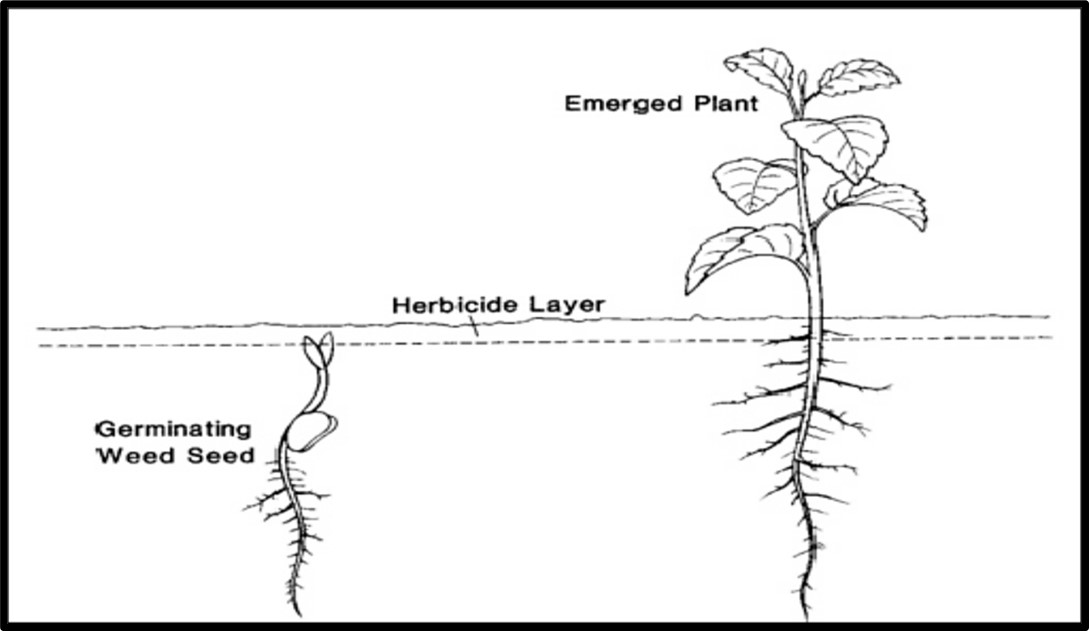 Figure 1. Diagram of preemergence herbicide effects on seedlings.
Proper Chemical Selection and Mode of Action
In regards to pre-emergent chemistry options, the most common in the market today are:
- prodiamine (Barricade)
- pendimethalin (Pendulum)
- dithiopyr (Dimension)
- oxadiazon (Ronstar (Restricted Use Pesticide))
- flumioxazin (Sureguard) and
- indaziflam (Specticle).
The Herbicide Resistance Action Committee (HRAC) places each of these chemistry options in a herbicide group based on its mode of action —the exact way the chemistry affects a targeted weed. Each individual group is identified by a unique HRAC code (Figure 2).
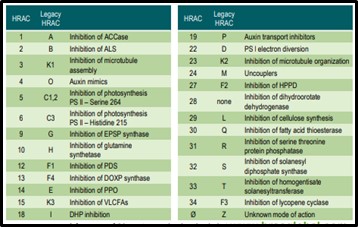 Figure 2. Herbicide Resistance Action Committee mode of action codes. (Click image to enlarge)
HRAC 3/K1 “Root Pruners”
Prodiamine (Dinitroanaline), Pendimethalin (Dinitroanaline) and Dithiopyr (Pyridine) belong to the HRAC 3/K1 group. Chemistries in the HRAC 3/K1 group work by inhibiting microtubule assembly, which impacts cell division. HRAC 3/K1 chemistries are commonly referred to as the “root pruners,” because the microtubule assembly inhibition occurs within the root tips and meristematic regions, where cell division occurs. HRAC 3/K1 chemistries may cause turf root stubbing; thus, these products are not recommended to be used on damaged or weak turf (Figure 3).
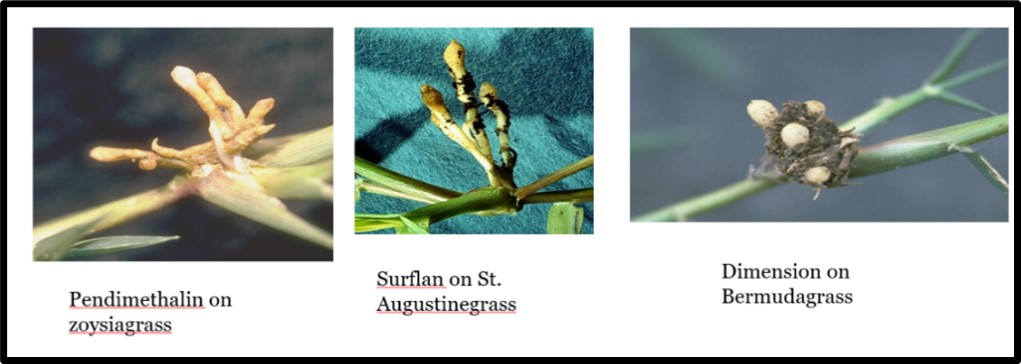 Figure 3. Effect of preemergence herbicides on turfgrass root growth.
HRAC 14/E - PPO Inhibitors
Oxadiazon (Ronstar (Restricted Use Pesticide)), on the other hand, does not inhibit roots. For this reason, oxadiazon is commonly used during the spring and on weak/transitioning or newly planted turf. Oxadiazon is classified as HRAC 14/E which inhibits protoporphyrinogen oxidase (PPO). PPO Inhibitors block the production of chlorophyll and heme within the targeted species. PPO inhibitors lead to the formation of radical oxygen species, which destroy cell membranes, causing plant cells to leak and disintegrate. Collectively, these actions kill the target species. The HRAC 14/E classification also includes flumioxazin (Sureguard), carfentrazone (Quicksilver), sulfentrazone (Dismiss), and pyraflufen-ethyl (Octane). Of these, only Ronstar (Restricted Use Pesticide) and Sureguard demonstrate preemergence activity. In the liquid form, oxadiazon (Ronstar Flo (Restricted Use Pesticide)) must be applied to dormant turf. Because much of the turf in the southeast does not go completely dormant, oxadiazon is commonly sparged on fertilizer carriers for application to greens, actively growing turf.
HRAC 29/L - Cellulose Biosynthesis Inhibitors
The final mode of action to cover are those in the HRAC 29/L group, which includes indaziflam (Specticle) and isoxaben (Gallery). HRAC 29/L chemistries inhibit cellulose biosynthesis, which impacts cell wall formation, cell division and elongation in meristematic regions of plants. Although this group controls plant species via the roots, similarly to HRAC 3/K1 (previously mentioned), this is a completely different mode of action and can be used in rotation to prevent resistance from forming.
There are many products and modes of action to combat stubborn weeds, while maintaining the strength and healthy growth of your turf. In part two of Weed Management Strategies, we will discuss three more prominent methods used by turf professionals to preserve a healthy and sightly turf.
Continue reading Weed Management Strategies: Part 2.
Related Resources

In addition to being the nation’s largest distributor of branded fungicides, herbicides, and insecticides, Harrell’s produces custom-blended fertilizers, specialty liquids, and wetting agents. Additionally, Harrell’s is the exclusive US owner, formulator, and distributor of all POLYON® branded products.
TEAM HARRELL'S
STAY EQUIPPED
Never stop learning. Access FREE continuing education courses from Harrell’s.
LET'S GROW
PRESS RELEASES
PRESS RELEASES
STAY EQUIPPED
Never stop learning. Access FREE continuing education courses from Harrell’s.
LET'S GROW