

Weed Management Strategies: Part 2
6/30/2021 - By Clay Breazeale

Missed Part One? Don't forget to read Weed Management Strategies: Part 1.
In part two of Weed Management Strategies, we will cover three more strategies and modes of action to vastly improve your weed management including: application coverage, timing of applications, and resistance management. We will begin with adequate application coverage.
Adequate Application Coverage
If a sparged fertilizer is used for chemical application, turf managers must utilize a proper spread rate to ensure adequate coverage. A minimum of 267#/Acre for a regular SGN (220-280) and 200#/Acre of a mini SGN (125-150) product are commonly recommended application spread rates. Remember, the fertilizer granule is carrying the chemical. As a result, using an inadequate application rate will leave too much space between the applied fertilizer granules, which can lead to breakthrough problems. Visually, this can be referred to as the “sphere of influence,” which is illustrated in Figure 4. The white dots illustrate the fertilizer granules and the red rings illustrate the area of chemical coverage once the sparged chemical is washed off the fertilizer granule. The top image illustrates an application rate that was too low, leaving space in chemical coverage. The bottom image illustrates an adequate spread rate. In this image, the red rings touch or overlap which minimizes any gaps in coverage; thus, increasing efficacy of control.
| 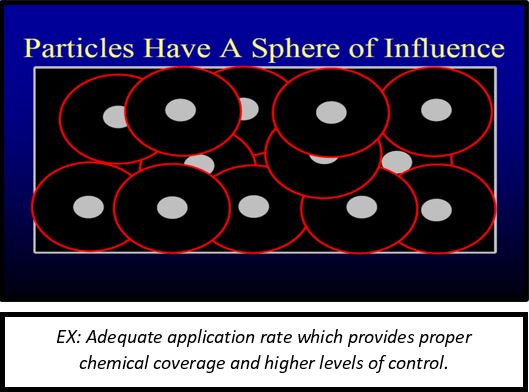 |
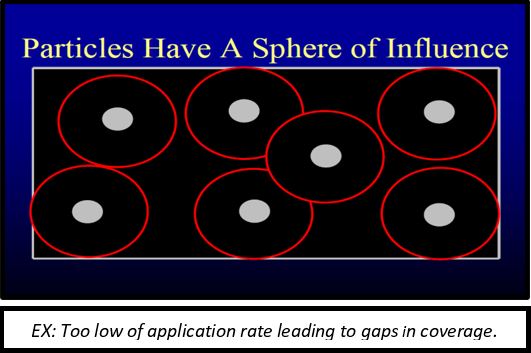
Figure 4. "Sphere of Influence" effect of pesticides applied on a granular carrier.
Timing of Application
Timing of application and residual control are major considerations when choosing a product. Applications must take place before germination occurs because, the chemistries already mentioned, provide little to no post-emergent control. Once weeds mature, additional post-control chemistries will be needed to meet the desired level of control. Air and soil temperatures can be used to help predict weed germination and determine application timings. Especially for three major weeds in the southeast: Annual Bluegrass, Goosegrass and Crabgrass.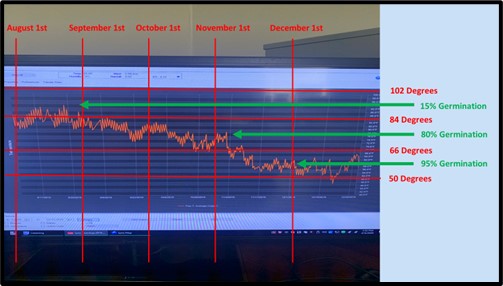
Poa germinates optimally when air temperatures are 66 degrees during the day and 50 degrees at night. That said, Poa will start to germinate in much warmer weather under certain environmental conditions. For example, approximately 15% of Poa germination will occur when day-time temperatures are 100 degrees and night-time temperatures are 84 degrees. The included image is from weather station data in the southeast. This property made a Poa application in November and was experiencing poor control. That fall was relatively warm, so the turf management team delayed their application of pre-emergent. The temperature data suggests that a large portion of Poa germination was likely occurring prior to the pre-emergent application, causing the lack of control. This same analysis can be conducted for all weed germination temperatures to help properly time pre-emergent applications for increased levels of control. Crabgrass germinates when soil temperatures reach 55 degrees at the 2” depth for 3 consecutive days and nights. Goosegrass germinates when soil temperatures reached 60-65 degrees at a 4” depth for 24 continuous hours.
Resistance Management
Now that mode of action, application coverage and timing have been discussed, one should have enough information to select a product to provide high levels of control for a specific species. If you are looking for more detailed product information, Dr. Bert McCarty of Clemson University provides a great online guide – “Pest Control Guidelines for Professional Turf Managers.” Among the many topics covered, there is a great review of herbicides. To access please click the link: Clemson University Pest Control Guidelines for Professional Turf Managers
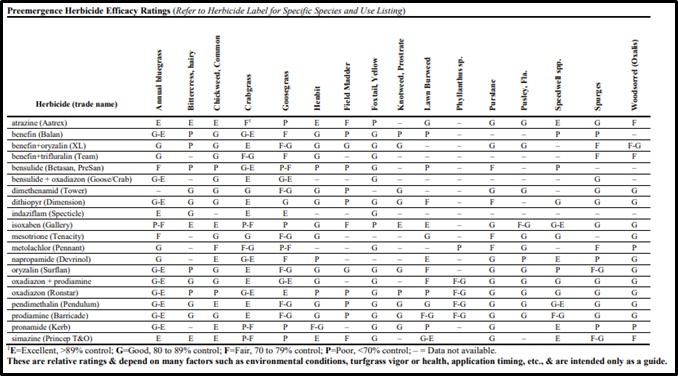 Click image to enlarge.
Combating Herbicide Resistance
Still not getting adequate results? It may be time to consider if the weed population on your property has developed resistance to specific herbicides and implement an alternative weed control stratagy, to prevent further development of herbicide resistance. There are a few factors to consider when discussing resistance:
- Herbicide resistance is described as “the inherited ability of an individual plant to survive a herbicide application, that would kill a normal population of the same species.”
- It is more prevalent in prolific seed producing species like Annual Bluegrass, Goosegrass and Nutsedge.
- On average, it takes approximately 7-10 years of consecutive use of the same herbicide group for resistance to occur or be noticed. Remember, an herbicide group may include many chemistries; thus, rotating between two chemistries within the same herbicide group will neither prevent resistance development nor control resistant varieties. For example, if you are trying to prevent resistance development in yellow nutsedge, rotating between Monument and Certainty, which are both sulfonylureas from HRAC 2/B, will not aid with resistance prevention. An alternative strategy would be to rotate between Monument and Dismiss NXT, two products with active ingredients of differing modes of action: HRAC 2/B and HRAC 14/E.
- Herbicides do not cause genetic resistance, they select out susceptible biotypes that already exist. When this happens, the uncontrolled biotype produces seed, spreads, and becomes the dominant biotype. Dr. Fred Yelverton at NC State University shares a great illustration of the progression of resistance (Figure 5). A resistant biotype may already be present through genetic diversity. Typically, resistance is first noticed in “pockets” of hard to control weeds. If herbicide groups are not rotated, the resistant plant will eventually spread throughout a property. Based on the numbers of seeds produced per plant species, the spread could be exponential.
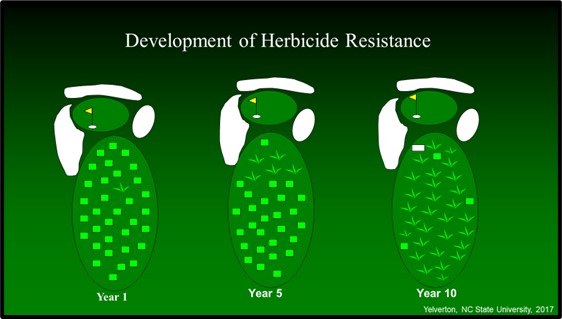 Figure 5. Progression of herbicide resistance over time. Credit: Dr. Fred Yelverton.
Considering these factors, what can you do to combat resistance? Rotating herbicide groups is always the first consideration. While this works, rotation must occur frequently to adequately combat resistance. Per research, consider the varying efficacies of the following rotation schedules on resistance:
- Consecutive use of the same mode of action leads to resistance in 7-10 years.
- Rotating modes of action 2 seasons on: 1 season off inhibits resistance for 45 years.
- Rotating modes of action 1 season on: 1 season off inhibits resistance for 60 years.
- Rotating modes of action 1 season on: 2 seasons off inhibits resistance for 90 years.
Often, a product may be used for many seasons, then a turf manager will decide to rotate off for one season to aid with resistance management. Considering seed bank quantity and seed viability, this infrequent approach is not enough to prevent and control resistant varieties. In this scenario, if a resistant variety is present, it will simply germinate the following year when the original product of choice is utilized. If rotation is the chosen direction, it must be done frequently.
The next option, which is actively being discussed by weed scientists, is the incorporation of different herbicide groups into the same application. This can be completed with a mixture of pre- and/or post-emergent chemistries. Such tank mix combinations are proving beneficial for resistance management and are just as effective against resistance as frequent rotation. Additionally, the inclusion of post-emergent chemistries with pre-emergent applications allows turf managers more flexibility when timing applications. An example of a tank-mix program is Bayer’s PRE3 program which combines 3 different herbicide groups for Poa control. (Figure 6)
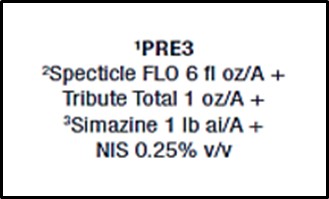 Figure 6. Bayer PRE3 program for annual bluegrass control.
Frequent rotation or tank mix combinations have become an industry norm for the fungicide market. With limited access to herbicides in new herbicide groups, it’s imperative that turf managers implement similar strategies or risk resistance and inadequate levels of control.
How successful has your weed management program been? What strategies have been helpful to your weed management? Are you thinking of implementing some of these strategies at your property?
Please reach out to your Harrell’s rep if you would like to talk more about weed management and pre-emergent strategies.
Missed Part One? Don't forget to read Weed Management Strategies: Part 1.
Related Resources

In addition to being the nation’s largest distributor of branded fungicides, herbicides, and insecticides, Harrell’s produces custom-blended fertilizers, specialty liquids, and wetting agents. Additionally, Harrell’s is the exclusive US owner, formulator, and distributor of all POLYON® branded products.
TEAM HARRELL'S
STAY EQUIPPED
Never stop learning. Access FREE continuing education courses from Harrell’s.
LET'S GROW
PRESS RELEASES
PRESS RELEASES
STAY EQUIPPED
Never stop learning. Access FREE continuing education courses from Harrell’s.
LET'S GROW