

The Turf was PERFECT…until you Aerified!!
3/17/2020 - By John Keeler
With aerification season right around the corner, having a calculated plan of attack to ensure your turf’s recovery will be critical to your success. It’s no secret that there are a multitude of fertility programs out there to aid in recovery. With all the options floating around, it’s important that you choose the right one for your turf. You’ll probably want to add your own secret twist on the program too, just to spice it up a little. Either way, you’ve got to get it right, because let’s face it, recovery from aerification can make or break a reputation.

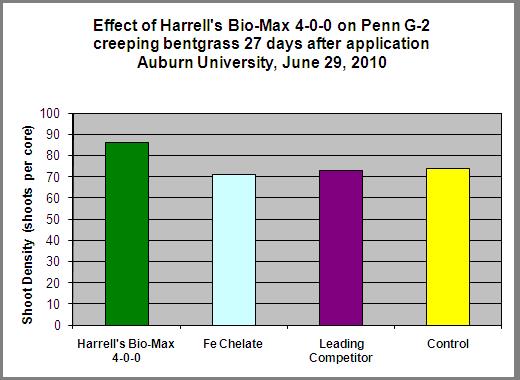
To make sure that your turf stays perfect after aerification, there are a number of small applications that can make a big difference. One of the most important sprays that you can make before and after aerification is the application of Cytokinin, Humic acid and Fulvic acid through Harrell’s Bio-MAX® 4-0-0 and EarthMAX®. Let’s take a look at why your turf will be begging for these key ingredients, come aerification season.
Seaplant extract contains extremely high levels of Cytokinin, which is the growth hormone responsible for cell division and root growth. Supplementing turf with seaplant extract has been shown to stimulate production of antioxidants in plant cells and promote the activity of an important antioxidant enzyme: superoxide dismutase. The overall result is a boost to the turf’s immune system, or in other words, a smooth road to recovery.
Humic acid is a natural soil conditioner that acts as an organic binding agent and microbial stimulator. It enhances the plant’s ability to take in essential nutrients, which is key for that bounce-back. The humic substances will also provide a food source to the soil microbes, causing them to flourish.
Fulvic acid is a biostimulant that contributes to plant health, physiological fitness and stress tolerance by enhancing the availability of nutrients, vitamins, coenzymes, and auxins. Fulvic acid also increases the amount of carbohydrates in the plant. More carbohydrates means more energy, and more energy means more reserves for aerification recovery.
It’s also important to remember that these acids aren’t just a single acid. Rather, they’re a mixture of many different acids which serve various complex purposes in the soil. Humic and Fulvic acids also even help degrade elements commonly found in pesticides. For that reason, they’re commonly applied when trying to recover after pesticide misuse.
There’s definitely no silver bullet when it comes to aerification recovery, and every situation will be different. But, if you keep these tips in mind, your roots will surely thank you, and your post-aerification turf can flourish further from there.
Related Resources

In addition to being the nation’s largest distributor of branded fungicides, herbicides, and insecticides, Harrell’s produces custom-blended fertilizers, specialty liquids, and wetting agents. Additionally, Harrell’s is the exclusive US owner, formulator, and distributor of all POLYON® branded products.
TEAM HARRELL'S
STAY EQUIPPED
Never stop learning. Access FREE continuing education courses from Harrell’s.
LET'S GROW
PRESS RELEASES
PRESS RELEASES
STAY EQUIPPED
Never stop learning. Access FREE continuing education courses from Harrell’s.
LET'S GROW