

Colorants, Pigments and Dyes—What’s The Difference?
9/9/2020 - By Dr. Raymond Snyder
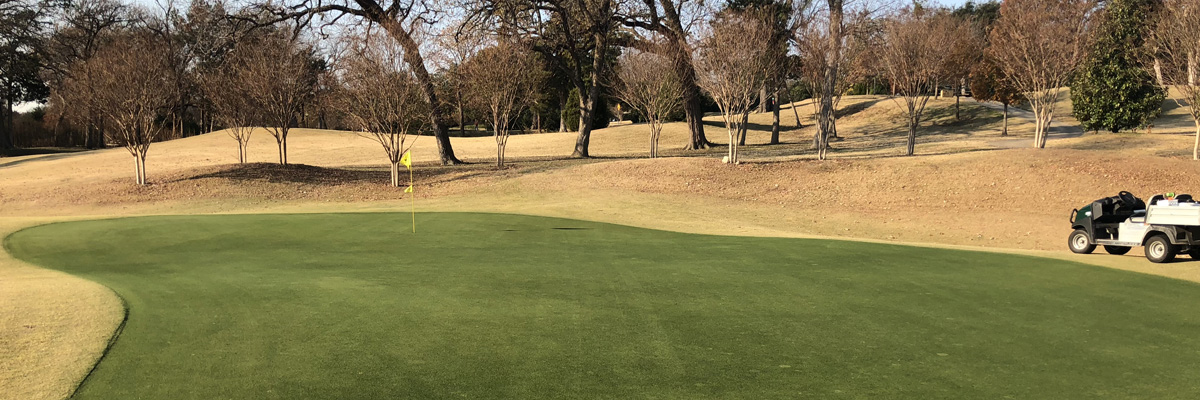
The utilization of pigments, colorants, and dyes continues to grow in the turf market. And while they’ll all give your turf some color, each one has its own intended use based on its formulation chemistry. They all have their place in today’s turf world, but properly utilizing each product is critical to ensuring you maximize effectiveness and get the results you’re looking for. Here’s a breakdown of each category and the ideal situations for implementing them.
Paints
The primary purpose of this category is to provide natural green color on semi-dormant to dormant turf. These products are also useful on athletic fields to indicate necessary field demarcations. Generally, they don’t penetrate the plant tissue, especially when applied to dormant turf. Paints typically contain some latex for binding, and they’re the longest lasting of the colorants applied.
Combination Colorants
These products, like our SprayMAX® Dormant Green®, are typically a combination of a pigment and a polymeric colorant. They are a superficial coating which can be broken down slowly by sunlight and water and can be removed by mowing. These colorants should be applied on wet turf for uniform coverage. They’re extremely effective and less detrimental than paints to pumps and seals.
Pigments
Pigments, like PAR® SG, have low solubility and are highly concentrated. They penetrate turfgrass leaves shortly after application, resulting in a more natural look, even after sunlight exposure and mowing. Their chemistry translocates within the plant, often providing a high-quality turf response several days after application. They are low use rate products, and their chemistry can even impart physiological plant responses, as observed in this field study conducted at Virginia Tech. They’re also ideal for use prior to dormancy and utilization of a polymeric colorant, but not ideal for use on dormant turf.
Dyes
A dye is highly water soluble and therefore loses its physical structure during application, resulting in rapid fading following application. Dyes, like Green Spray Indicator, are normally used as spray pattern indicators when applying plant protectants and plant nutrient applications.
So, hopefully that paints a clearer picture of the different options available to you if you’re interested in adding some color to your turf. With dormancy on the horizon, now is a great time to consider which options might be best for you. If you have any questions or need any help weighing your options, don’t hesitate to reach out to your local Harrell’s rep. They can work with you to come up with a game plan based on your specific needs.
Related Resources

In addition to being the nation’s largest distributor of branded fungicides, herbicides, and insecticides, Harrell’s produces custom-blended fertilizers, specialty liquids, and wetting agents. Additionally, Harrell’s is the exclusive US owner, formulator, and distributor of all POLYON® branded products.
TEAM HARRELL'S
STAY EQUIPPED
Never stop learning. Access FREE continuing education courses from Harrell’s.
LET'S GROW
PRESS RELEASES
PRESS RELEASES
STAY EQUIPPED
Never stop learning. Access FREE continuing education courses from Harrell’s.
LET'S GROW