

5 Tips for Interpreting Soil Test Results
5/6/2020 - By Dr. Jeff Atkinson
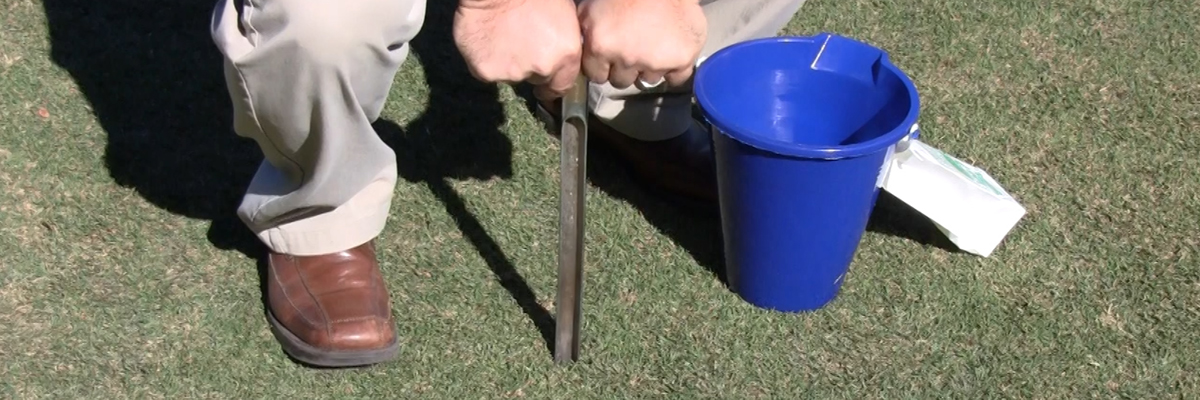
Why bother with a soil test? Can’t you just monitor your turf for visible symptoms of a nutrient deficiency, and then apply a corrective fertilizer? Sure, you could do that, but that’s kind of like buying a car without a fuel gauge and just saying “I’ll fill it up when it runs out of gas.” Most likely you’ll wind up in a bit of a bind, stranded somewhere on the side of the road. Not the best approach, right? You’re missing out on an opportunity to prevent the issue before it ever begins. Similarly, by not soil testing, you’re basically setting yourself up to run out of gas. Odds are, it will lead to unnecessary fertility inputs and more headaches down the road. According to Liebig’s Law of the Minimum, plant growth is not dictated by the total resources available, but rather by the scarcest resource. One nutrient deficiency—even if all others are adequate—will limit growth. So, for only about $30 and few hours of time, there’s no question that soil testing should be a part of developing your fertility program, but how do you get the most out your tests? Below are five tips to consider when implementing an informative and actionable soil testing program:
1. Stay Consistent
Consistency is key to the success of a soil testing program. Inconsistency can lead to confounding results which make interpreting and implementing solutions a challenge.
Nutrient availability naturally fluxes as the seasons change. Sampling at variable times throughout the year may cause confusion, as nutrient availability can shift without the influence of supplemental fertilizer applications. To prevent confusion, take soil samples on an annual schedule, sampling close to the same time of year as possible. This approach should reduce any discrepancies from seasonal effects on soil test results.
Consistency is also important when it comes to the soil testing lab. The table below outlines soil test results received from four separate soil testing facilities, all for the same homogenized soil sample. Notice the general trends are similar, but specific concentration values vary. Variability in results between labs can be attributed to several factors, including differences in technique or extraction solution. We’ll go more into extraction solution a little later.
Sending samples to a certain lab in year one, and then a different lab in year two can result in confusing conclusions, which ultimately aren’t actionable. Talk to your neighboring courses and find out who they trust the most. Then, pick a lab and stick with them.
Table 1. Soil test results from four independent soil testing labs of the same homogenized soil sample.
| Lab #1 | Lab #2 | Lab #3 | Lab #4 | |
|---|---|---|---|---|
| pH | 8.1 | 7.9 | 7.5 | 7.7 |
| Organic Matter % | 0.9 | 0.85 | 1.2 | 1.2 |
| CEC | 8.9 | 44.56 | 51.67 | 16.3 |
| P lb/a | 54 | 42 | 77 | 40 |
| K lb/a | 12 | 40 | 24 | 50 |
| Mg lb/a | 80 | 262 | 265 | 338 |
| Ca lb/a | 3416 | 16,710 | 19,380 | 24,360 |
| Na lb/a | 24 | 40 | 30 | 0 |
2. Know the extraction solution
The soil test extraction solution has significant influence on your results. For example, let’s consider two extraction solutions used to test for phosphorus in a calcareous soil: Solution A and Solution B. Phosphorus extraction with Solution A may indicate the soil phosphorus concentration is 20 lbs/A, while extraction with Solution B may indicate phosphorus levels to be 50 lbs/A. If everything else is equal, there’s a clear difference in the ability of the two extraction solutions to remove phosphorus from calcareous soils, but which one more accurately predicts a plant’s ability to take the phosphorus?
There’s a lot of information available on the nuances of extraction solutions and which ones are most appropriate for various conditions. Mehlich III is commonly the default extraction solution for many soil testing laboratories and is considered the most universal extraction solution. In other words, Mehlich III provides consistent results in terms of plant availability across the widest range of soil and environmental conditions.
Unfortunately, many soil testing labs don’t indicate the default extraction solution that they use to conduct soil tests, but in many cases, you can request a specific extraction solution on the soil test submission worksheet. Either way, your soil testing lab of choice should be able to inform you of their default extraction solution.
More information relating to extraction solutions and appropriate tests for specific nutrients is outlined in the reference below:
Carrow, RN, L. Stowall, W. Gelernter, S. Davis, R.R. Duncan, and J. Skorulski. 2004. Clarifying soil testing: II. Choosing SLAN extractants for macronutrients. Golf Course Management: January 2004, pp. 189 – 193.
3. Have a baseline
So you’ve received the soil test results, but what do the numbers mean? A lot of work is required to understand the relationship between nutrient concentrations indicated by a soil test and their effects on plant growth. Many soil tests report nutrient concentrations, then classify the concentration as deficient, adequate, or excessive. Just like the variable results of the four soil testing labs outlined above, thresholds defining nutrient sufficiency levels can be equally diverse.
Sufficiency Level of Available Nutrients (SLAN) and The Minimum Level for Sustainable Nutrition (MLSN) are two baseline threshold approaches for classifying soil test nutrient results as deficient or adequate. In other words, the two approaches outline specific soil nutrient concentration minimums that must be met to ensure adequate nutrient availability for plant growth. More information on each approach can be found through the following resources:
SLAN: Carrow, RN, L. Stowall, W. Gelernter, S. Davis, R.R. Duncan, and J. Skorulski. 2004. Clarifying soil testing: III. SLAN sufficiency ranges and recommendations. Golf Course Management: January 2004, pp. 194-198.
MLSN: https://www.paceturf.org/journal/minimum_level_for_sustainable_nutrition
4. Avoid combining samples from different areas
Soil is highly variable, and samples from different areas of a property can have drastically different characteristics. If you know fairways four through seven are very sandy, and the rest are heavy clay, don’t combine a sample from fairways six and twelve. Whenever possible, take and submit samples from areas with similar properties. A realistic example of this concept is to submit separate samples for USGA greens and push-up greens that may be present on the same property. The same can be said for a property that has both areas with a thick organic soil horizon and other areas that were stripped to the sub soil during construction.
More information on how to properly take a soil sample can be found in the video linked below, starring our very own Dr. Raymond Snyder:
5. A fertility program should evolve
Annual soil testing is an excellent way to understand the effects of a fertility program on soil nutrient reserves. Let’s say a 2020 soil test indicates the soil is low in magnesium. Incorporating a magnesium source into a Harrell’s custom fertilizer blend for 2020 would be a smart way to address the magnesium deficiency. Looking forward in our crystal ball, a 2021 soil test of the same area indicates magnesium levels are adequate to sustain healthy turf growth through the 2021 season, and a supplemental magnesium application is not needed. Perhaps another deficiency could be addressed instead, or a nitrogen feeding could be the sole focus of the 2021 granular fertility program. Either way, without a consistent soil testing program, you won’t know exactly which nutrients your soil is lacking, or which ones are sufficient. Therefore, you won’t be able to fine tune your fertility program based on your turf’s evolving needs.
Recently Harrell’s partnered up with The Nature Conservancy and The Fertilizer Institute to endorse the 4R Nutrient Stewardship Program. With roots in agriculture, but applicability to all growing markets, 4R Nutrient Stewardship is an innovative and science-based approach that offers enhanced environmental protection, increased crop production and quality, increased grower profitability, and improved soil productivity and sustainability. The concept is to use the right nutrient source, at the right rate, the right time, and in the right place to support nutrient needs of plants. To effectively implement nutrient stewardship and the 4R framework, soil testing is absolutely vital. Without soil testing, it would be extremely difficult to determine the right nutrient source to correct any deficiencies, or the precise rate required to adequately correct those deficiencies without overloading. Ultimately, testing will save you time and money in the long run, and it can prevent unnecessary excess nutrients from being lost to the environment.
Although these 5 tips are some major considerations to keep in mind for your next soil test, there’s certainly more to discuss when it comes to incorporating an actionable soil testing program into your agronomic program. We welcome the opportunity to have that conversation with you, so don’t hesitate to reach out to your local Harrell’s rep for more information. We’d love to talk to you more about how regular soil testing can help you provide higher quality playing surfaces, while at the same time becoming a better steward of your property and the environment.
Related Resources

In addition to being the nation’s largest distributor of branded fungicides, herbicides, and insecticides, Harrell’s produces custom-blended fertilizers, specialty liquids, and wetting agents. Additionally, Harrell’s is the exclusive US owner, formulator, and distributor of all POLYON® branded products.
TEAM HARRELL'S
STAY EQUIPPED
Never stop learning. Access FREE continuing education courses from Harrell’s.
LET'S GROW
PRESS RELEASES
PRESS RELEASES
STAY EQUIPPED
Never stop learning. Access FREE continuing education courses from Harrell’s.
LET'S GROW